How to Improve Agent Productivity: Proven Strategies That Actually Work

Contact center and support team leaders consistently rank agent productivity among their top priorities, yet achieving meaningful improvement remains frustratingly difficult. Rising customer expectations combine with increasingly complex tools and processes to create pressure on agents who must resolve issues quickly while maintaining quality. The challenge isn’t motivating agents to work harder—most support professionals are already giving maximum effort. The real opportunity to improve agent productivity lies in removing friction, providing clarity, and ensuring agents can execute their best work consistently without the guesswork and searching that wastes time during every customer interaction.
- What Is Agent Productivity (And How It’s Measured)
- Common Barriers That Reduce Agent Productivity
- 7 Proven Ways to Improve Agent Productivity
- Why Workflow Guidance Is the Missing Link
- How Process Shepherd Helps Improve Agent Productivity at Scale
- Final Thoughts: Improving Agent Productivity Is About Clarity, Not Speed
What Is Agent Productivity (And How It’s Measured)
Agent productivity measures how effectively support representatives resolve customer issues and complete work during their available time. Unlike simple output metrics that count activities, true productivity balances efficiency with quality—ensuring agents work quickly without sacrificing resolution effectiveness or customer satisfaction.
Organizations typically measure agent productivity through several key metrics. Average Handle Time (AHT) tracks how long interactions take from start to finish, including talk time and after-call work. First Contact Resolution (FCR) measures the percentage of issues resolved during initial contact without requiring follow-ups or escalations. Customer Satisfaction (CSAT) captures how customers rate their support experiences, reflecting both resolution quality and interaction professionalism.
Additional metrics include tickets resolved per shift, adherence to schedule, escalation rates, and quality assurance scores. Together, these measurements reveal whether agents are working efficiently while maintaining the service standards that drive customer satisfaction and loyalty.
The critical insight is that productivity doesn’t equal rushing conversations or cutting corners. An agent who resolves issues completely during first contact, even if conversations take slightly longer, delivers better productivity than one who handles calls quickly but creates repeat contacts or escalations. True productivity comes from agents having the clarity, information, and guidance to resolve issues correctly and efficiently during every interaction.
Common Barriers That Reduce Agent Productivity
Despite investments in training, tools, and processes, agents face persistent obstacles that waste time and reduce their effectiveness during customer interactions.
Context switching between tools and systems forces agents to toggle between multiple applications during conversations. They might check customer information in a CRM, search for solutions in a knowledge base, update tickets in a helpdesk system, and reference policies in separate documents—all while maintaining conversation flow with customers. Each switch consumes seconds that compound across thousands of daily interactions while increasing cognitive load and error risk.
Searching for answers across documents and knowledge bases interrupts problem-solving as agents hunt for information they know exists somewhere but can’t quickly locate. Customers wait on hold while agents search multiple repositories, try different keywords, or ask colleagues for help finding procedures or policy clarifications. This searching wastes time and damages customer experience while undermining agent confidence.
Inconsistent processes across agents and teams emerges when different people handle similar situations differently based on personal interpretation or incomplete understanding. One agent might troubleshoot connectivity issues one way while colleagues use different diagnostic sequences. Inconsistency creates inefficiency when customers calling back get different answers, requiring additional time to resolve confusion created by contradictory guidance.
Over-reliance on training and memory sets unrealistic expectations that agents will remember every procedure, policy detail, and troubleshooting sequence after initial training. In reality, agents forget specifics over time, especially for infrequently encountered scenarios. The gap between what training covered and what agents remember during actual work creates hesitation, errors, and time spent seeking guidance that should be immediately available.
Unclear decision paths during live customer interactions leave agents uncertain about next steps when standard procedures don’t perfectly fit situations. Should this issue be escalated or can it be handled at this level? Does this refund request meet exception criteria? Which of three possible solutions is most appropriate given these circumstances? Agents spending time figuring out what to do next rather than confidently executing clear processes represents pure productivity loss.
Many teams invest heavily in tools and training yet agents still struggle in the moment when they need to make decisions, find information, or execute processes correctly under the pressure of live customer conversations. Addressing these real-time execution barriers creates more productivity improvement than simply adding more training or tools.

7 Proven Ways to Improve Agent Productivity
Improving agent productivity requires systematic approaches that remove friction and provide clarity during actual customer interactions.
1. Automate Repetitive and Low-Value Tasks
Automation that handles routine administrative work frees agents to focus energy on problem-solving that genuinely requires human capability. Data entry after calls, ticket status updates, routine information lookups, and standard notifications can be automated, eliminating hours of manual work weekly from each agent’s workload.
When agents aren’t spending time on administrative tasks that software can handle, they devote attention to understanding customer needs, troubleshooting problems creatively, and building relationships that drive satisfaction and loyalty. This shift from task executor to problem solver typically improves both productivity metrics and job satisfaction since agents engage in meaningful work rather than repetitive drudgery.
Here’s the key: To improve agent productivity, identify tasks that follow predictable patterns and don’t require judgment. If a task involves the same steps every time and could be described in a simple flowchart, automation can probably handle it, freeing human capacity for work requiring intelligence and empathy.
2. Centralize Agent Knowledge
Fast access to accurate information determines whether agents resolve issues efficiently or waste time searching while customers wait. Centralized knowledge management brings product documentation, troubleshooting guides, policy information, and common solutions into searchable repositories that agents can query instantly during conversations.
The productivity gain comes from reducing the time spent looking for answers. When agents know one reliable system contains everything they need and can find relevant information in seconds rather than minutes, handle time decreases while resolution quality improves. Agents also gain confidence knowing they can quickly verify details rather than relying on potentially faulty memory.
Effective knowledge centralization requires more than just collecting documents in one location. Information must be well-organized with intuitive navigation, searchable with keywords agents naturally use, updated regularly so content stays current, and integrated into agent workflows rather than requiring separate applications. Knowledge that’s technically centralized but practically difficult to access doesn’t deliver productivity benefits.
3. Reduce System Hopping with a Unified Workspace
Every time agents switch between applications—CRM to knowledge base to ticketing system to policy documents—they lose seconds of time and cognitive focus. The cost of switching between tools compounds across thousands of interactions monthly, creating substantial productivity drain.
Unified workspaces that bring critical information and capabilities into single interfaces eliminate this switching penalty. Agents see customer history, relevant knowledge articles, ticket details, and process guidance in one place rather than toggling between windows. This visibility into complete customer context without hunting across systems accelerates resolution while reducing errors from information existing in one system but not consulted because accessing it requires switching.
The technical implementation might involve custom agent desktops, integrated platforms combining multiple capabilities, or tools that embed within existing systems to surface information where agents already work. Regardless of approach, the goal is eliminating the fragmentation that forces agents to remember which system contains which information and waste time navigating between them.
4. Streamline Workflows and Decision Paths
Better workflows represent the most frequently discussed productivity improvement, yet implementation often fails to deliver expected results. Organizations document improved processes, update training materials, and communicate new procedures—then discover agents still execute inconsistently because knowing what the workflow says differs from following it correctly during actual customer interactions.
The problem of agents guessing next steps persists even after workflow documentation improves. When procedures exist only as static documents or training content, agents must remember them, interpret how they apply to specific situations, and execute correctly under pressure. This cognitive burden creates hesitation, errors, and inconsistency that undermine theoretical workflow improvements.
Guided workflows and decision trees address this execution gap by providing step-by-step direction during actual work rather than expecting agents to recall and apply documented processes from memory. Instead of agents reading about how troubleshooting should work, interactive workflows present the next diagnostic question based on previous responses. Instead of memorizing when escalation is appropriate, decision trees apply escalation criteria automatically and route issues when thresholds are met.
This approach transforms workflows from documentation to execution systems. Agents follow clear paths adapted to specific customer situations rather than improvising based on incomplete memory of general procedures. The productivity gain comes from eliminating the time spent figuring out what to do next, reducing errors from incorrect procedure execution, and ensuring consistency across agents and shifts.
5. Improve Onboarding and Ongoing Training
Traditional training attempts to prepare agents for every situation they’ll encounter by frontloading massive amounts of information during onboarding. This approach struggles because agents can’t retain everything taught in the initial weeks, learning without context doesn’t stick as well as learning during actual work, and training content becomes outdated as products and procedures evolve.
The gap between training and real-world execution creates productivity problems when agents finish onboarding technically “trained” but still uncertain how to handle many situations they’ll face. Months pass before new agents reach the proficiency of experienced colleagues, during which their productivity lags and they require significant supervisory support.
More effective approaches combine foundational training that covers core concepts with learning while working where guidance appears exactly when needed during actual customer interactions. This just-in-time learning reduces the memorization burden while providing context that makes lessons stick. Agents learn by doing with support rather than learning in classrooms then applying without support.
Ongoing training also matters since products change, procedures evolve, and skills require continuous development. Regular refreshers, targeted coaching based on performance data, and embedded guidance that reinforces correct execution all contribute to maintaining and improving productivity beyond initial onboarding.
6. Empower Agents with Clear Resolution Authority
Productivity suffers when agents must seek approval for routine resolutions they should be empowered to handle independently. Unnecessary escalations, supervisor approvals for standard requests, and unclear authority boundaries create delays that extend handle time, frustrate customers, and waste capacity of both agents and managers.
Clear resolution authority with well-defined boundaries gives agents confidence to make decisions within their scope without constant validation. When agents know they can issue refunds up to certain amounts, waive fees in defined circumstances, or modify accounts within established parameters, they resolve issues immediately rather than creating approval workflows that delay resolution.
The key is making authority boundaries explicit rather than ambiguous. Agents need to know exactly what they can do independently versus what requires escalation. This clarity reduces hesitation and prevents both under-escalation (handling issues beyond authority) and over-escalation (seeking approval for decisions agents should make themselves). Both scenarios hurt productivity—the first through rework when unauthorized decisions get reversed, the second through delays and wasted management capacity.
7. Measure What Truly Matters
Measuring agent productivity exclusively through Average Handle Time incentivizes speed over quality, often reducing true productivity as agents rush conversations, provide incomplete troubleshooting, or transfer issues prematurely to end calls quickly. While efficiency matters, focusing only on speed creates pressure that undermines the resolution quality and customer satisfaction that define successful support.
More meaningful measurement combines efficiency with effectiveness. First Contact Resolution shows whether agents resolve issues completely rather than creating repeat contacts. Customer Satisfaction reveals whether customers feel well-served regardless of interaction length. Quality scores assess whether agents follow procedures, provide accurate information, and deliver professional service. Consistency metrics reveal whether similar situations get handled similarly across agents.
Aligning metrics with customer outcomes rather than just operational efficiency creates better productivity improvements. When agents know they’re measured on complete resolution and customer satisfaction, not just call speed, they focus on working efficiently to resolve issues correctly rather than working quickly to end conversations, driving true productivity that benefits both customers and operations.
Why Workflow Guidance Is the Missing Link
Most productivity advice tells teams what to do—centralize knowledge, streamline workflows, improve training, empower agents. These recommendations are sound, but they miss the critical challenge: showing agents how to execute effectively in real time during actual customer interactions.
The gap between knowing best practices and consistently applying them under pressure explains why, when we measure how we improve agent productivity, the results often disappoint despite significant investments. Teams document better workflows, update knowledge bases, and enhance training, then discover agents still execute inconsistently because the moment when guidance is needed—during live customer conversations—is exactly when agents can’t consult documentation or remember training details.
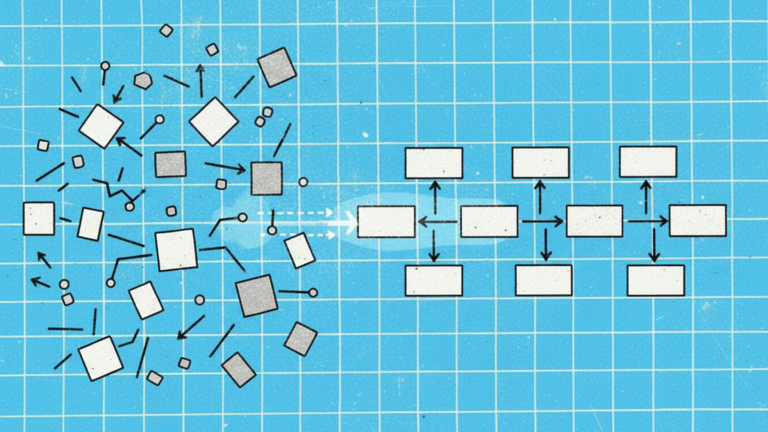
Guided workflows bridge this execution gap by providing real-time, step-by-step direction that adapts to specific situations. Instead of static flowcharts agents must interpret and apply mentally, interactive decision trees present questions, evaluate responses, and automatically determine next steps based on customer circumstances.
This approach reduces cognitive load by eliminating the mental work of remembering procedures, interpreting how they apply, and figuring out next steps. Agents answer questions and follow clear instructions rather than holding entire processes in working memory while simultaneously conversing with customers. The reduction in cognitive demand alone creates substantial productivity gains.
Guided workflows eliminate guesswork about unclear decision points. When procedures involve judgment calls—is this situation severe enough to escalate, does this request meet exception criteria—embedded logic applies consistent criteria rather than leaving agents to interpret ambiguous guidelines differently. This consistency improves productivity by reducing errors and unnecessary escalations while ensuring similar situations get handled similarly.
Standardization without rigid scripts preserves the human element while ensuring procedural consistency. Agents follow structured paths through processes while still applying empathy, adjusting communication style, and exercising judgment within defined parameters. The workflow ensures procedural accuracy while agents focus on customer relationship aspects.
Process Shepherd represents platforms designed specifically to deliver this real-time workflow guidance at scale. Rather than documentation that exists separately from work, Process Shepherd turns best practices into executable processes that guide agents through customer interactions step-by-step, ensuring correct execution without requiring memorization or constant reference to static materials.
How Process Shepherd Helps Improve Agent Productivity at Scale
Process Shepherd addresses the execution gap that limits agent productivity by providing interactive guidance during actual customer work rather than expecting agents to remember and apply training and documentation perfectly under pressure.
Faster agent ramp-up and onboarding occurs because new agents can handle complex scenarios with guidance from their first week rather than requiring months to memorize procedures before taking interactions independently. Instead of frontloading massive information during training, agents learn core concepts then rely on workflow guidance for procedural details. This dramatically reduces time-to-productivity while maintaining quality standards that traditionally required extensive experience.
Organizations report onboarding reductions from 8-12 weeks to 3-4 weeks for equivalent competency when combining foundational training with embedded workflow guidance. New agents contribute productively sooner, reducing the period where they consume training resources but provide limited value, directly impacting productivity metrics across the team.
Reduced handle time without rushing conversations happens when agents spend less time searching for information, figuring out next steps, or second-guessing decisions. The workflow presents relevant information and clear direction exactly when needed, eliminating the pauses and uncertainty that extend interactions unnecessarily. Agents maintain natural conversation pace while working more efficiently through systematic processes.
The distinction from simply pressuring agents to work faster is critical. Process Shepherd reduces unproductive time—searching, hesitating, guessing—allowing agents to devote attention to understanding customer needs and building rapport rather than managing procedural complexity. Conversations become more focused and effective rather than just faster.
Higher first-contact resolution results from agents following complete troubleshooting sequences rather than partial attempts before escalating. Guided workflows ensure systematic diagnostic approaches that identify root causes, reducing the incomplete troubleshooting that creates repeat contacts or premature escalations. Agents confidently resolve issues within their scope because clear guidance eliminates uncertainty about whether they’re handling situations correctly.
This FCR improvement directly impacts productivity by reducing the duplicate work of repeat contacts while freeing agent capacity for new issues rather than rework on problems that should have been resolved initially.
Consistent execution across teams ensures night shifts, remote agents, and new hires follow the same procedures as day shift veterans. This consistency eliminates the productivity variation between top performers and average agents by giving everyone access to best practice execution through workflow guidance. Performance becomes more predictable and quality more uniform across the operation.
Each productivity outcome ties back to removing friction during actual work. Workflow efficiency increases when agents don’t waste time searching or figuring out next steps. Training effectiveness improves when guidance continues beyond initial onboarding into daily execution. Performance becomes more consistent when everyone follows standardized processes adapted to specific situations rather than improvising based on individual interpretation.
Final Thoughts: Improving Agent Productivity Is About Clarity, Not Speed
The persistent focus on improving agent productivity through efficiency drives often misses the fundamental insight: agents are already working hard. The opportunity isn’t making them work harder or faster—it’s removing the friction, uncertainty, and searching that waste their effort during every customer interaction.
Productivity comes from reducing cognitive load so agents can focus on customers rather than managing procedural complexity. It comes from providing clear guidance exactly when needed rather than expecting perfect recall of training and documentation. It comes from standardizing execution without rigid scripts that remove human judgment and empathy from customer service.
Teams that operationalize best practices through embedded workflow guidance outperform those that simply document better processes and hope agents will remember and apply them correctly under pressure. The difference between knowing what good looks like and consistently executing it determines whether productivity improvements materialize or disappoint despite significant investments.
Modern agent productivity isn’t about pushing harder—it’s about working smarter through clarity, guidance, and removing the barriers that prevent agents from applying their full capability to helping customers. Organizations that recognize this distinction and invest in real-time execution support rather than just training and documentation achieve productivity improvements that are both substantial and sustainable.